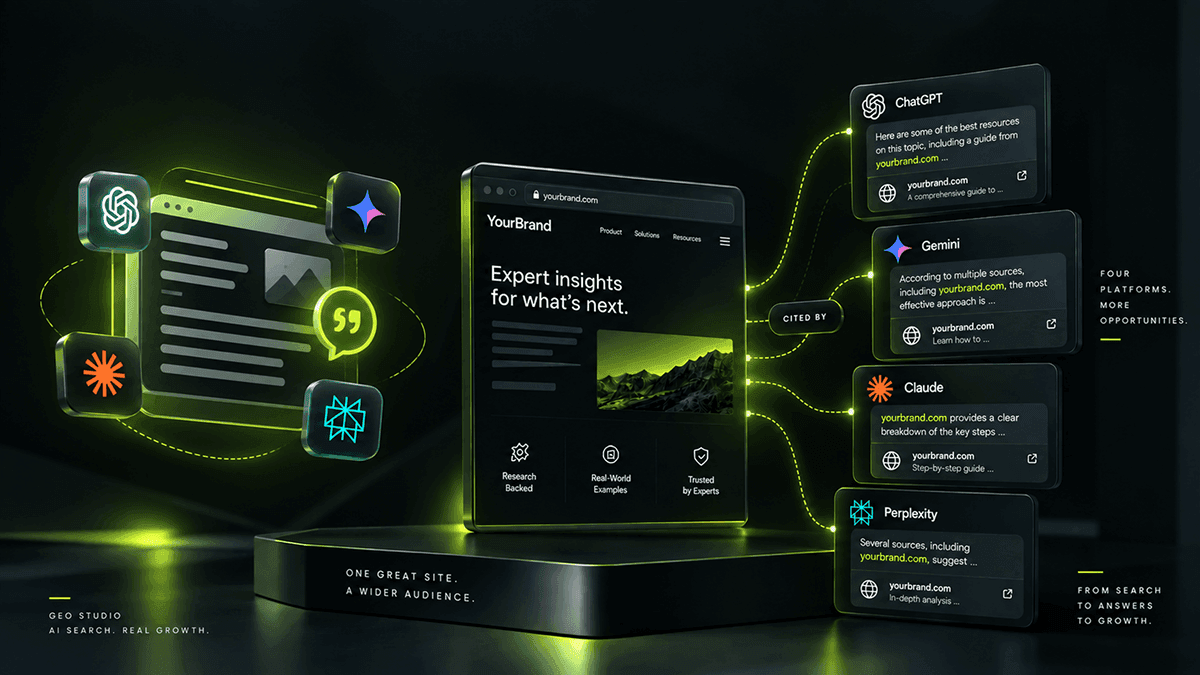
Start with the truth: citations cannot be guaranteed
AI citations are generated by systems that decide which sources are useful for a specific question at a specific time. They can use different search providers, retrieval methods, freshness windows and model behaviour. That means no vendor can responsibly promise that adding a schema block or changing a heading will make your brand the first citation everywhere.
A better objective is to increase citation eligibility and source-worthiness. Ask whether an engine can access the page, understand what it proves, trust the information, and see why this source is more useful than a generic alternative.
1. Make the right pages accessible
For ChatGPT search, OpenAI tells publishers not to block OAI-SearchBot if they want public content to be discovered, surfaced and cited. Perplexity similarly recommends allowing PerplexityBot for search visibility. Google AI features rely on Google Search crawling and indexing, so Googlebot access and snippet eligibility remain fundamental.
Do not stop at robots.txt. A CDN, WAF, bot-management product, authentication wall or JavaScript rendering failure can block content even when robots rules look correct. Test important pages as a crawler would receive them.
2. Publish information worth citing
AI systems do not need a 1,500-word paraphrase of the ten pages already ranking. Citation-worthy content gives the answer something concrete to ground on: original data, first-hand tests, expert analysis, methodology, product documentation, transparent pricing, definitions, named frameworks, comparison criteria, case studies or precise technical instructions.
Google's 2026 guidance calls this non-commodity content. The idea is useful beyond Google. If your page says something specific, verifiable and useful, an answer engine has a stronger reason to choose it as evidence.
3. Make claims easy to verify
If your product page says 'fastest platform' with no methodology, the statement is difficult to trust. If it says 'median deployment time across 312 customer changes in Q2 2026 was 4 minutes' and explains the measurement, the claim becomes inspectable.
Use descriptive headings, visible authorship, dates when freshness matters, supporting links, screenshots or methodology notes. Structured data can clarify article, organization, product or software information, but it should match what users can actually see.
4. Build a clear entity footprint
Answer engines need to know that the company name, product, category, founders, website, social profiles and third-party references refer to the same entity. Keep naming consistent. Maintain a strong About page. Connect official profiles. Use stable Organization and WebSite identifiers in structured data. Make product pages explicit about what the software does, who it is for and how it differs.
External corroboration matters too. Credible coverage, independent reviews, partner pages, directories, documentation references and expert mentions can reinforce what your own site says. Do not manufacture low-quality mentions; Google explicitly warns against inauthentic mention-building.
5. Answer the prompts your buyers actually ask
Citation strategy should begin with prompt research. A cybersecurity company may care about 'best SOC 2 automation for startups', 'Vanta alternatives for Indian SaaS companies', and 'how to prepare evidence for ISO 27001'. Each prompt implies different evidence and different supporting pages.
Track recommendation, comparison, discovery and problem-solving prompts. Then map each important prompt to the best page on your site. If no page genuinely satisfies the question, that is a content gap.
6. Measure citations, not just traffic
AI discovery is partly a zero-click experience. A brand can gain influence before it gains a referral session. Track citation rate, mention rate, share of voice, sentiment or description accuracy, cited URLs and competitor presence alongside traditional analytics.
GEO Studio's Prompt Tracking and AI Citation Rankings are built around this problem: see whether selected AI engines mention the brand, which competitors appear instead and how visibility changes as fixes are deployed.
A simple 30-day citation plan
Week 1: audit crawler access, indexability, main entity pages and your top 20 commercial prompts. Week 2: improve the pages that should answer those prompts, focusing on original evidence and clarity. Week 3: strengthen internal links and credible external corroboration. Week 4: re-run prompts, compare citations and prioritize the next technical or content fixes.
The point is not to chase every AI answer. It is to systematically improve the information environment around the questions that affect revenue.